Building the writing app that gets out of your way
Lorist is a beautifully minimal writing app that does exactly what it’s supposed to: leave you alone to write some fucking words.
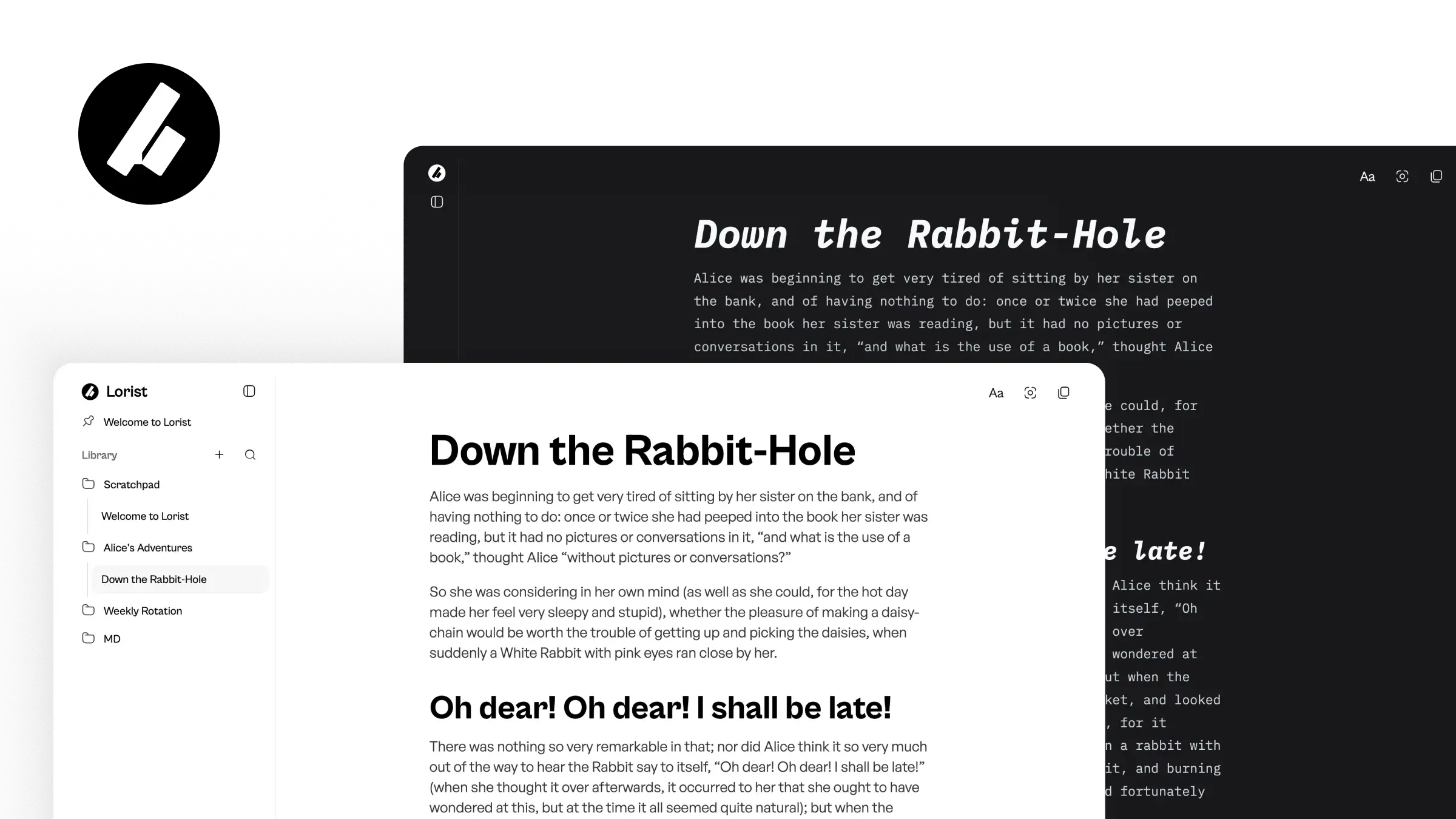
It’s designed for long-form, distraction-free, personal writing. No 14 cursors zooming around, no bullshit AI features, no ‘build an entire SQL database of recipes in your writing tool’ shenanigans: just a place to write words, and a place to give those words a home.
A calm app for a chaotic process
I wrote my first book in Google Docs. Well, that’s technically true, I wrote 80% of it in an A5 notebook in the bath. But to get those words into a computer, I used Google Docs.
There are few things on this planet that diminish my faith in humanity more than Google Docs. But it was my publisher’s preferred delivery format, and I was six chapters in before I realised that while there might be some redeeming qualities—albeit requiring a tenured archeologist career’s worth of digging to find—writing words, in the word processing app, was not one of them.
I wrote my second book in my own hand-rolled app, because every other app I tried either did too much, didn’t do enough, or was already starting to fill with slop features and huge amounts of bloat.
The personal writing experience
Lorist is for personal writing. It’s for sitting down with a coffee and just enjoying a good writing session. It has an extremely limited feature set, makes good use of shortcuts, and I would put the functional simplicity of its editor against any writing app out there.
The core flow of using Lorist is as straightforward as it gets. You add some folders, you add some documents to those folders, and you write until you don’t want/need to write anymore.
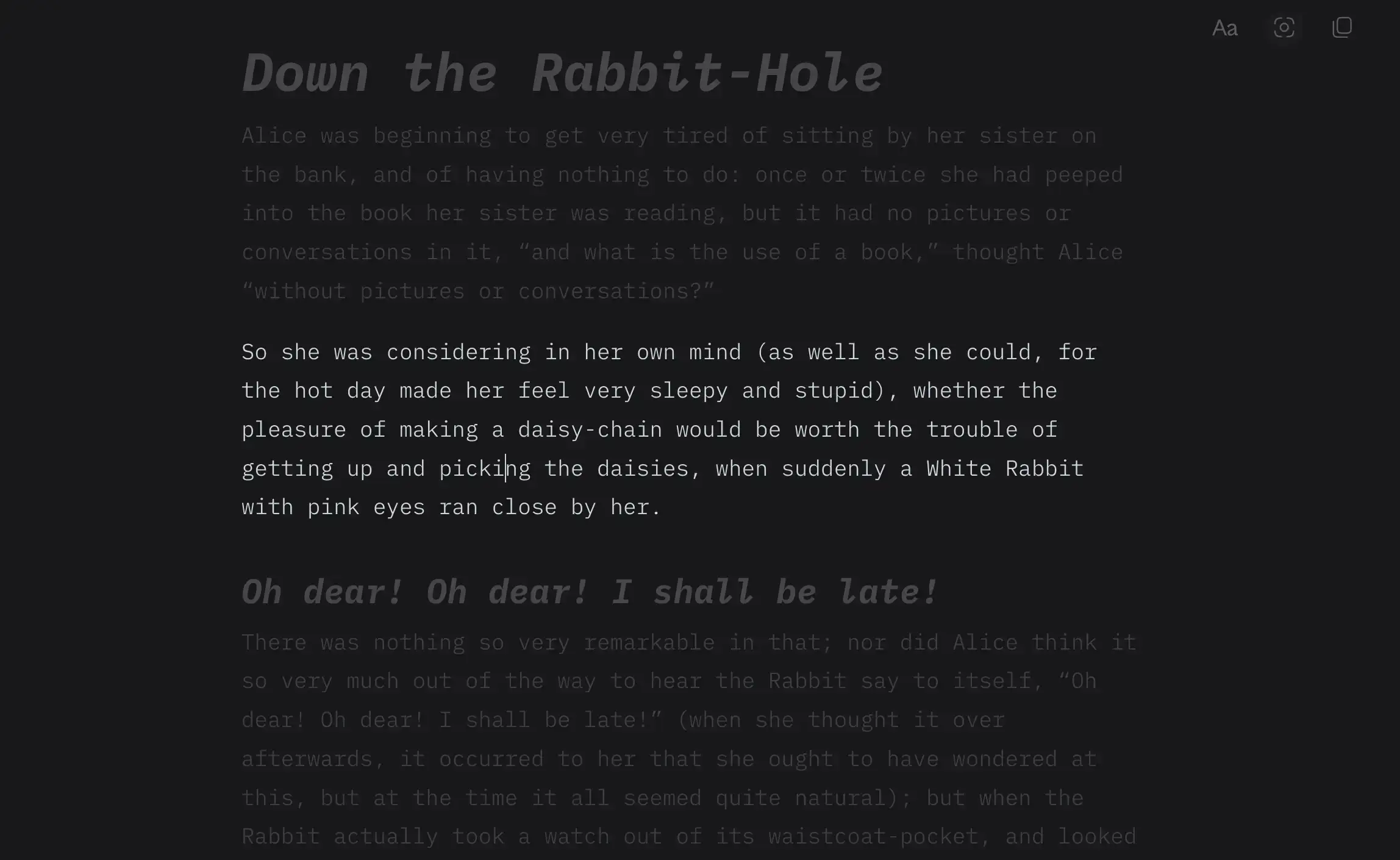
Lorist is an exercise in constraint and minimalism in an age of ‘ship everything all the time’. There’s a focus mode. There’s a super quick indexed search. There are weekly and per-document word goals. And that’s about it. Originally, it did a lot more, and killing 3 incredibly complex features mid-way through development was as cathartic as it was correct.
An incredibly fast local experience
By being local–only (everything is saved to IndexedDB) Lorist feels incredibly fast. There’s no weird syncing states where you can’t do anything, there’s no pointless server calls. You just write, everything saves, everything opens instantly, search is rapid, and the whole app is stateful so all those instant changes persist throughout the front-end.
This is, to me, a great of example of how it’s built is how it’s designed. Subverting the sluggishness we’re used to on the web helps feed right in to the no-bullshit, reliable writing experience.
Goals without gamification
The only real ‘supportive’ feature in Lorist is writing goals. You can choose to set goals at a folder level, which will then cascade to any document in that folder.
Lorist is designed to be self–deterministic. You’ll be motivated to write when you have a nice place to write. There’s no nudging you to use it. There‘s no ‘streaks’. There’s no fucking demonic green owl shouting at you because you’re about to miss your six-week ‘speaking Italian to a pre-recorded idiot’ streak.
This made goals a somewhat contentious feature. I’m huge on writing goals. I would not have finished my book if I wasn’t regularly seeing my progress towards that hallowed 10,000-word chapter target. But not everyone likes, wants, or needs goals to hold themselves accountable. Not everyone who writes even needs to hold themselves accountable in the first place.
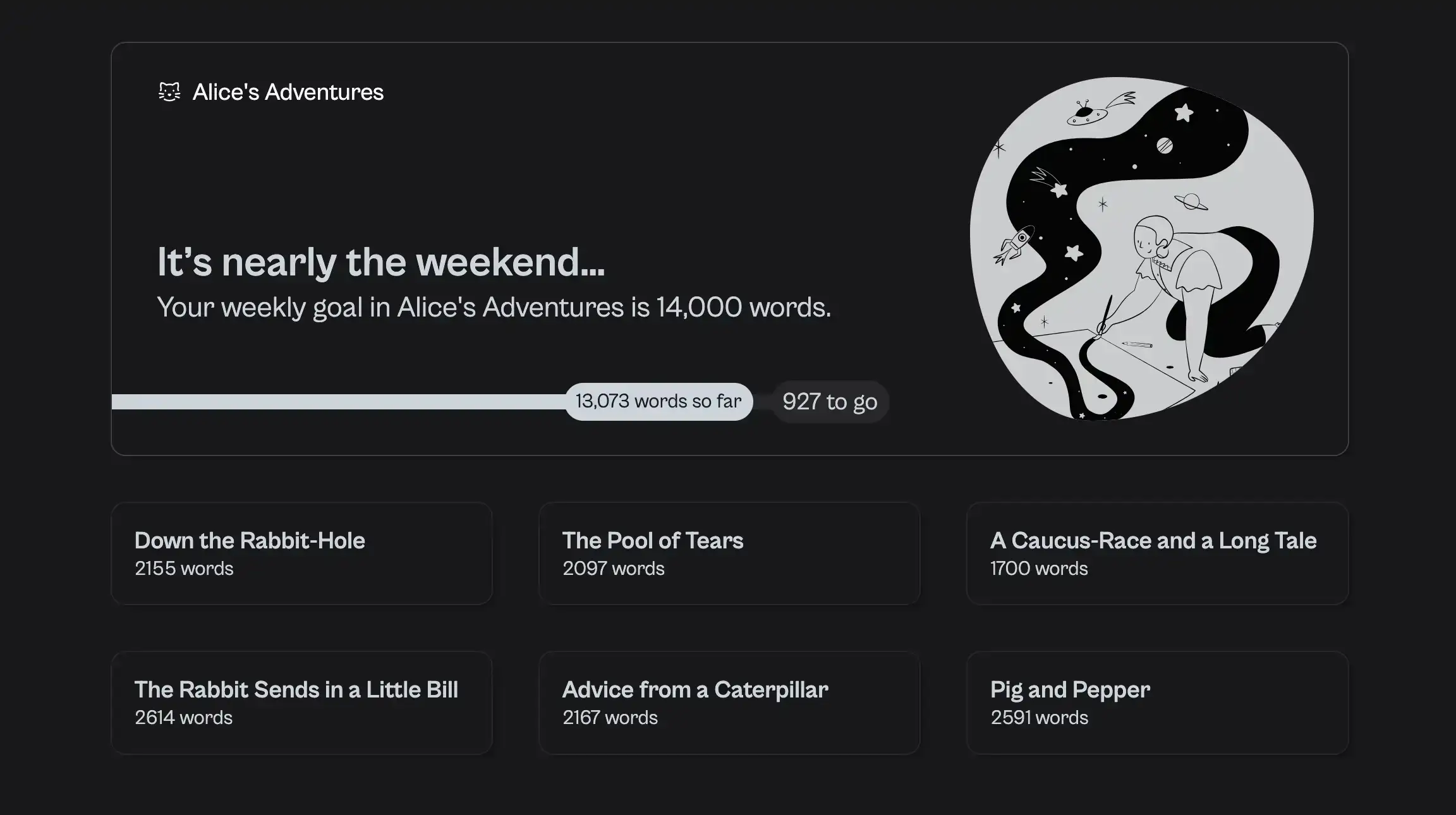
So goals in Lorist are opt-in, purposefully buried, and very low-key. You’ll see your per-document progress as a simple progress circle while writing, and you’ll see your weekly progress when you go to a specific folder page.
Okay yes the UI might explode unicorns and rainbows when you first hit a goal while writing, but sometimes you have to give the people what they (definitely) want.