Bringing the US’s de-facto credit score checker to the UK market
I worked with Credit Karma on a six-month project to help them bring their product to market in the UK.
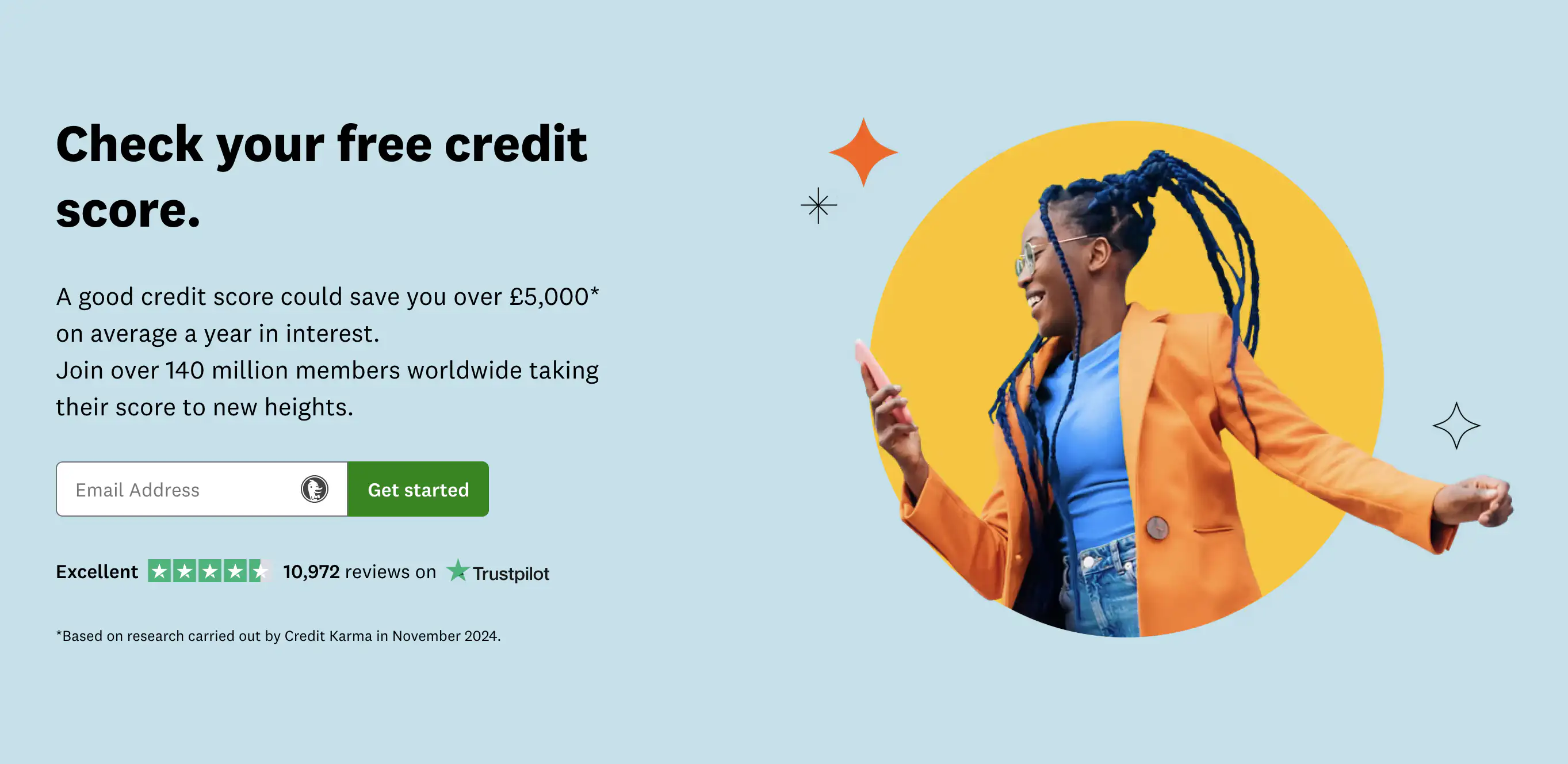
Already a roaring success in the US, Credit Karma was relatively unknown in the UK, and when it came to attitudes towards finance, credit and specific financial literacy, there was a notable discrepancy between the US and UK markets.
What I did
Research & Discovery
Ethnographic research and user testing
Problem Space Exploration
User personas, journey mapping
Early-Stage Design
IA, OOUX, and Wireframes
Hi-Fi Design
UI & interaction design
0 – 1 in an existing product ecosystem
After multiple research rounds, we realised that the UK market was so different to the US, that any incarnation of Credit Karma in the UK would be in stark contrast to many of the offerings of the US app.
This led to what was ostensibly a 0–1 design sprint for a product that kind of already existed. Which is absolutely a weird position to find yourself in as a designer, but also a super exciting one.
Research and discovery
Given the above, a solid ethnographic research round (or, as it turns out, several) was the non-negotiable starting point of this project.
We ran several ethnographic studies, using ethical, trauma-informed research practices, to learn how folks of different backgrounds and financial situations spoke and thought about financial concepts like credit and debt.
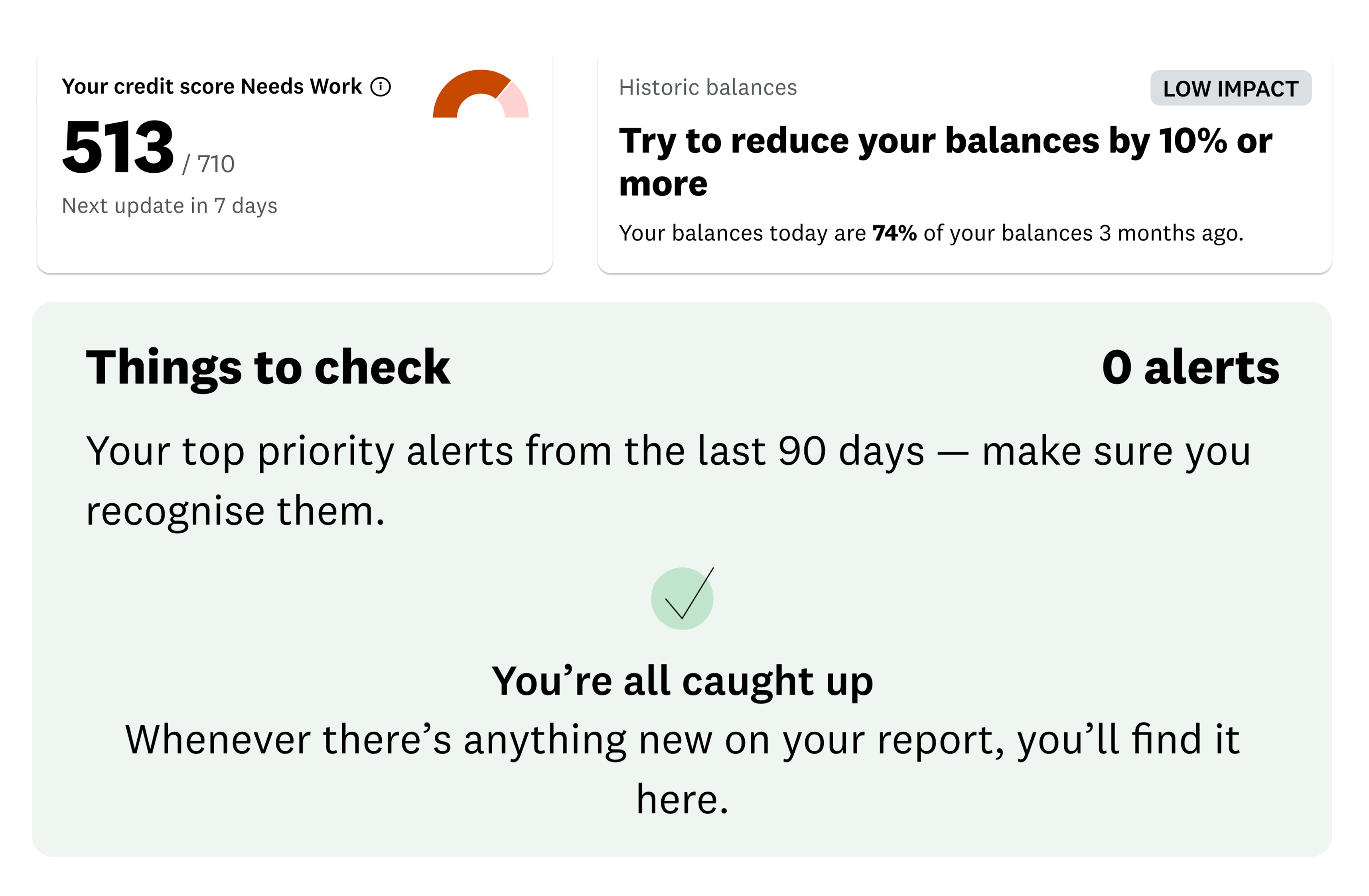
All screenshots contain fake data and don’t represent any real individual’s financial content.
Education and nonlinear progress
When dealing with fintech, one of the prevailing concepts you’re going to encounter is anxiety. We’re designing tools for financial education and independence, but to a societal backdrop of criminal levels of wealth disparity and a seemingly endless cost of living crisis. People in financial trouble are not going to dance merrily into engaging with a fintech product.
One of the early principles we introduced was to take a step back from wishy-washy ‘well done, champ’ language often found in products where progress is tracked or encouraged (and one’s credit score absolutely falls under that) and focus more on the factual side of things.
As such, we placed a big emphasis on highlighting notable areas of a credit report, without turning them into big celebratory moments or potential triggers. If you’ve managed to get your credit usage down, that’s a massive step towards better financial control, but you don’t need to be patronised with gamified bullshit to learn that you‘ve done a good thing. Similarly, if you’ve had to lean on your credit a bit more over a subsequent month, you don’t need scalding for it.
There’s simply far too much a product does not know about your circumstances for it to be able to speak authoritatively about what is good or bad in your situation. Financial progress isn’t linear, and it doesn’t happen overnight.
This idea of nonlinear progress over a long period of use of the product was integral to what we produced.
Ownership and financial control
Ultimately, what folks needed from a tool like Credit Karma wasn’t some life-changing ‘fix all your finances in one fell swoop’ kind of deal. It was an ongoing, open conversation about what’s happening with your finances over time.
By compressing the ‘emotive’ side of reporting (being less patronising about the good shit, being less reactionary about the bad shit) we were able to provide an honest outlook to folks on their overall finances. Coupled with educational content that was neutral and concise, we launched a product that was helpful, unassuming, and as psychologically safe as we could possibly make it.
Constant evaluation
This project was a bit of a perfect storm in terms of research and evaluation. We worked like an early stage startup, but had the backing of a billion-dollar organisation to make it work. As such, it felt like all the good parts of an incubator, without (most of) the bullshit.
A huge bonus to that was just how ingrained evaluative research already was in the Credit Karma process. We were able to almost constantly take prototypes through rounds of user testing, and ship with confidence at the end.
Financial products and recommendations
While Credit Karma serves offers for financial products like credit cards, auto loans, and such, I did not work on that side of things. It was a separate team, and while there was cross-org collaboration, this wasn’t a focus of my role in this project.
Credit Karma has since been acquired by Intuit. I had no relationship or collaboration with anyone from Intuit. From what I can tell, most of my work remains as it was when I designed it, but there’s bound to be some differences!